Showing posts with label recipes. Show all posts

Sunday, March 20, 2011

Baby Update and Real Food Alternatives to Dairy

Baby I. and I are coming along.  She is strong and sweet and not too hard to soothe.  I gave her her first bath today.  She has a head full of ash blond hair and long slender fingers.  I cannot get enough of her!  I would like to spend my whole day cuddling and feeding her.  Mr. Flavivius has off from work all week and has facilitated much of my babymoon desire, but tomorrow we will begin the new schedule.

A sweet friend came over yesterday and took some professional baby pictures of I. in the beautiful layette made for us by one of the ladies from church, her birthday suit, and then in her baptismal gown.  We have never had professional pictures taken of any of the children.  It was such a special treat!  I. slept through much the event and nursed a little bit, but was fairly contented for much of the 2 hours that Amber was here.  The couple that I saw were so beautiful.  I can't wait to share them with y'all.

Nursing started out great, but now I worry that maybe I'm not making enough milk, that this little nibbler is a bit too laid back, etc...  this happens to me everytime there is a new wee bean in the house, but I have the added concern that she is nor having enough bowel movements (only 5 since day 3).

I will be calling the pediatrician tomorrow and trying to decide what to do next.  She had a touch of jaundice on day 3, but it was not a concern then.  Bilirubin is stored in the tissues, but is primarily elimated through waste (a small amount through urine, but the majority through stooling).  Keep us in your prayers, please.  Also, if you've ever wished a real stinker on that know-it-all-not-yet-a-parent-friend, please, pass all that passion and fervent wishing/praying on to Baby I.  All poopy prayers are welcome.

+   +   +   +   +   +   +

Okay!  One of my motherly peeves around the Fast is how, in effort to keep the fast, we will replace a real food with a fake food.  Now, if I was being honest with myself, then no butter would mean, no butter substitute.  That would certainly put an end to my margerine/transfat/what-exactly-is-Earth-Balance-and-why is-it-kinda-grey? anxieties.  I eventually shelve these minor-freakouts for the sake to being able to cook fast friendly food that the kids will eat.  Invariably, this eventually leads to a soy overload and then freakout #2 "what-is-all-this-soy-doing-to-us?!"  

Soy products, in general, are the answer to the question:  What to do with all this agricultural waste?!  Fortunately, for all of us, the Church and Christendom have being dealing with the question of Lenten cooking for millenia (two actually).  If you to have concerns about the effects of soy on you and your children  then here is an easy dairy alternative for the nut milk inclined.  First. a little history on use of Almond Milk and then a recipe.  I hope you find it useful.  By making your own almond milk, you can also avoid all the yucky sweeteners and Bisphenol A that end up in a comercial product.

In the Middle Ages, animal milk was, of course, not refrigerated, and fresh milk did not stay fresh for long. Most cooks simply did not use much milk as the short shelf-life of the product made it a difficult ingredient to depend upon. Many recipe collections of the time advise that cooks should only rely on milk that comes directly from a cow, something not possible at all times, and purchasing milk was a dubious practice, for streetsellers of milk often sold wares that were either spoiled or diluted with water. Milk’s use had to be immediate, in cooking or by turning into cheese & butter. It was these difficulties that forced Medieval cooks to look upon milk with great reluctance, and so having milk in the kitchen was usually unheard of.
Rather than animal milk, Medieval cooks turned to something they could depend upon, and that was the milky liquid produced by grinding almonds or walnuts. This liquid, high in natural fats, could be prepared fresh whenever needed in whatever quantities. It also could be made well ahead of time and stored with no danger of degeneration. Because of its high fat content, it, like animal milk, could be churned into butter, and because it was not animal milk, it could be used and consumed during Church designated meatless days.
Almond milk was used extensively in period; all existing cookbooks call for it, and it must have been found in literally every Medieval kitchen. It's the prime ingredient in many, many recipes, and the modern cook recreating Medieval food will have to learn its production in order to prepare the most common of dishes. Fortunately, it's easily made.  from here
Homemade Almond Milk 
2 cups of raw almonds soaked overnight
5 cups of filtered water
1-3 teaspoons of natural sweetener of your choice (I like maple sugar) optional

Grind your soaked almonds with the water. Let steep for an hour.  Stir and strain through cheesecloth or a fine sieve.  You can save the ground remains to dry and grind again to use as almond meal.  Stir in sweetner if you choose to use it.

Saturday, January 1, 2011

New Year Preparations

We are getting ready for the new year and another name day, this time for our youngest son, B.  January 1st is his name day.  Never before has there been a more inflexible menu!  Except we changed a bit this year to accommodate my brother-in-law, J., who is Jewish. C'est la vie!

Every year we celebrate with a sugar spiced ham, black-eyed peas, braised cabbage, cornbread, and lighter-than-air, buttered biscuits.  This year Mama served roast goose.  The crowning glory of the dinner is a rich, aromatic cake called Vasilopita.  It is essentially a pound cake which it is perfumed with oranges and lemons and two spices of mysterious origin, Mahlab- (pronounced mă-HĂ-lăb) the seed kernel of a St. Lucia Cherry, and tears of Chios- resin of the mastic tree. The flavor of the mahlab is something akin to bitter almonds crossed with cherries, while the tears of Chios is very clean smelling, almost antiseptic.  In ancient times this mastic gum was worth its weight in gold, chewed as a remedy against bad breath, and was considered a powerful medicinal drug. Even today its antibacterial properties continued to be studied and it is reputed to kill H. pylori, the bacteria that cause ulcers which can cause stomach cancer.

You could use pre-ground ingredients or commercially prepared extracts, but I like being connected to all the little Greek women of the past, who had to grind their own spices and seasonings for their festal breads and cakes.  I use a heavy brass mortar and pestle.
Here is a little history about St. Basil the Great and the cake or bread baked in his honor from the website, The Vasilopita Coin:
THE HISTORY - This age old tradition commenced in the fourth century, when Saint Basil the Great, who was a bishop, wanted to distribute money to the poor in his Diocese. He wanted to preserve their dignity, so as not to look like charity, he commissioned some women to bake sweetened bread, in which he arranged to place gold coins. Thus the families in cutting the bread to nourish themselves, were pleasantly surprised to find the coins. 


THE MAN - St. Basil was one of the greatest Fathers of the Christian Church and appeared on the spiritual horizon of the Orthodox Faith. He was Bishop of Caesarea, Cappadocia (Asia Minor). He was born four years after the First Ecumenical Council held in the year 325 A.D. Saint Basil was one of the three Cappadocian Fathers of the Church (the others were Gregory of Nazianzus, his best friend, and his brother, Gregory of Nyssa). Saint Basil was the first person in human history to establish an orphanage for little children. He also founded the first Christian hospital in the world. His fame as a Holy Man spread like wildfire throughout the Byzantine world. He was considered one of the most wise and compassionate clergymen in the entire history of the Church. His Feast Day is observed on January 1st, the beginning of the New Year and the Epiphany season. The Church, therefore, in respect for his many contributions to the Church and to mankind in general, combined the joy and happiness of the New Year with the glory of the birth of Christ, and the Epiphany into what is known in the Orthodox Church as the Vasilopitta Observance.

The Vasilopita is a Beautiful Tradition, and a custom which should not be neglected by Greek Orthodox Christians as should perhaps be adopted by all Christians in the Western world. It is such a wonderful way to begin each New Year which God has given to the world. If you have been holding the observance in your home, congratulations 
and please continue to do so! If you have not, please start and keep this glorious family tradition!
Gran and B.
Happy New Year and a joyous feast to you and yours.  God grant my little B. many years in peace, health, and happiness.


Thursday, December 16, 2010

Handmade Gifts for Teachers

I have typically not been as diligent gift-giver for the kids' teachers as I would like to be.  I was seeking to rectify this oversight the day "It Came to Pass."  Between the four kids in school, they have eight main teachers.  In a family of eight with one on the way, times are never short on wants/need and are rarely long on moolah.  So what to do?  Donate to their Scrips account?  Well, it is not a bad idea and I can sneak in for $5-10 a teacher without much fuss or embarrassment, but it isn't very personal and this school does not participate.

So what to do?  A friend suggested bath bombs.  She and I made soap a few weeks ago and I had considered that, but then I ran across this bloggie suggestion:  Candy Cane Sugar Scrub!  Why, it's festive, pretty, and seasonally scented!  

So on that fateful day of Ankledoom, I ran out and bought a big bag of sugar and 4 boxes of candy canes and some peppermint essential oil.  Having recently made a castile-style soap, I have plenty of light olive oil and cocoa butter on hand.  Pint and half pint jars can cost as little or as much as you want to spend, but they aren't hard to find.  If you don't want to use olive oil, you can substitute it for Almond oil or Sunflower oil.  Any of them would be very healing to dry, winter skin.  

Finally, this project is simple enough to do with the kids.  It makes very little mess and takes approximately 10 minutes to put together.  Sadly, there are no pretty labels or ribbons for ours as I am limited on my travel capabilities, but I still think the jars of sparkly, pink fluffy sugar are pretty as can be all the same.


Candy Cane Sugar Scrub
(makes 8 pints)

4 boxes of candy canes (48 canes total)
8 cups of white sugar
4 cups of light olive, almond, or sunflower oil
4 tsp. Vitamin E oil for a preservative (optional, I didn't use it)
8 tsp. cocoa butter (optional, I did use it)
½ tsp peppermint essential oil


  • Unwrap all the canes and put into the food processor.  
  • Grind to a powder.  
  • Place sugar and candy cane powder in a bowl and whisk together.
  • Place oil and cocoa butter together in a small sauce pan and heat over medium low until the cocoa butter melts.  Let cool slightly.
  • Add essential oil.
  • Pour oil mix over sugar and mix thoroughly until it all looks like wet sand. 
  • Spoon into widemouth jars and decorate with festive ribbon or fabric of your choosing.
Ta-daa!

Wednesday, November 24, 2010

Corn Syrup Free Marshmallows

Yes, you can make them at home!
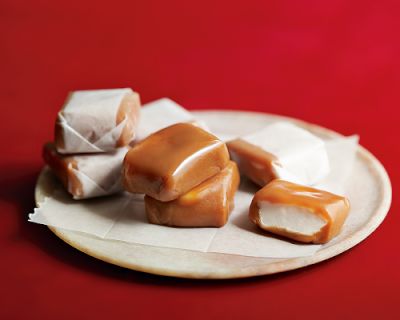
Every year since I have had children old enough to ask for hot cocoa I have made marshmallows.  They are one of only two candies I make.  The other being Modjeskas, which are really just caramel wrapped marshmallows (but are they ever addictive).
It seems that the whole country is trying to kick the corn syrup habit and our family is no exception.  It really cannot be healthy to eat so much corn anyway, regardless of its multivalence of forms and array of talents.  I took the liberty of modifying Martha's recipe to suit our needs and I have to say that I am pleased with the results.  I doubled this recipe and it worked like a charm.  If you do double it use a Bosch, your Kitchen Aid would float away on a hot syrupy river.  I used honey, but any syrup would do in its stead.

1 box of Knox gelatin (4 pkgs total)
1½ c cold water divided
3 cups of sugar (you can use raw sugar or organic sugar, but not sucanat or rapadura, it must be sugar of some variety)
1¼ c honey or agave nectar
½ t. sea salt
2 t. vanilla (I used vanilla bean paste.  So yummy!)
powdered sugar

In the bowl of a stand mixer fitted with the whisk attachment add gelatin and ¾ c cold water.


In a large heavy bottom pot, place the rest of your ingredients except vanilla: sugar, water, honey, and salt. Bring to a boil. continue to cook until it reaches 234°F-240°F on a candy thermometer (the soft ball stage).


Turn the mixer on low and pour hot syrup in a continuous stream into the mixer. Be careful. Raise the speed of the mixer slowly, so as not to slosh it all over the place. Raise the speed until it is on high. The syrup will go from a gold or tan to a off white and finally a winter white (sugar and corn syrup yield a bright white confection, this is less white, but still very white). It will take approximately 15 minutes. 

When you have a thick, white shiny taffy-looking stuff add your vanilla.
In a 11x13 pyrex dish (greased well), pour the marshmallow creme. Sprinkle the top with powdered sugar and set overnight. Cut into squares 12 hours later and dip in powdered sugar. 

Store in an air tight container, best within 2 days, but we eat them as long as they last.

Sunday, November 7, 2010

Angel Lush Cake Revisited

It has been far too long since I have brought something to our weekly church coffee hour besides greedy eyes and empty bellies.  This week Mr. Flavius asked if we could make something to end the shuffle o'shame (self-inflicted since no one knows who brings what).  I generally have tried to make main courses, but due to financial constraints I was forced to think outside of the box.

Which oddly enough, led me to a box, several boxes actually, and a few cans as well.  Apparently when people look for thrifty potluck recipes it lands them smack dab in the middle of processed food from a box territory.  And while that is fine, I just do not feel like that $1 package of Cool Whip and 99¢ package of vanilla pudding are really saving me all that much money and are shorting me on quality for sure.  On the other hand, store bought Angel Food Cake is totally worth my money, because 1) I do not possess the proper pan and 2) I am looking to maximize my easy moments these days.

I substituted Italian pastry cream (which you could substitut your favorite homemade vanilla pudding recipe, but this is one I make often) for the instant pudding and whipped cream for the tubs of Cool Whip.  What I ended up with was a lovely, thrifty sweet potlucky treat.  I hope you will try it.

Italian Pastry Cream
Prep time: 3 minutes
Cook Time: 10 minutes

6 tbsp. AP flour
3/4 c. sugar
2 c. of milk
6 yolks
1 tbsp of your desired flavoring (as fancy or not fancy as you like: vanilla, cognac, rum, orange liqueur, brandy, Soho, Kahlua ...)
a pinch of salt

Reserving the flavoring and 1/2 cup of milk, place all ingredients in a medium sauce pan over medium heat and whisk vigorously or use a stick blender, until the yolk and flour have completely combined.  With a whisk or a silicon spatula, stir frequently, scraping the bottom and sides of the pan to prevent the custard from scorching.  When the custard begins too thicken noticeable, remove from heat and stir vigorously (I use the stick blender here as well).  When it looks like a pot of thick pudding, your done!  Feel free to return to heat as necessary to continue thickening the custard.  Slow and steady is far better than quick and scorched.
When your custard is ready, strain through a fine mesh sieve and place a piece of plastic wrap on the surface of the custard and leave it to cool to room temperature before refrigerating.  The plastic will prevent a skin from forming on your custard.  You can also sprinkle a teaspoon of sugar on top, but I find it thins the custard over time.

**If you are in a hurry, chill over an ice bath (TIP!: add a goodly amount of salt to your ice water to speed up the process.  It will cut your time by half).

Whipped Cream

1 pint of heavy cream

In the bowl of an stand mixture (or using an electric hand mixture), pour the cream.  Using a whisk attachment, turn the mixture on low speed until bubble form on the surface of the cream.  Slowly turn up the speed, a little bit at a time as you watch the volume of the air increase.  When your cream has soft peaks and hills, turn off the mixer.  Pay attention, because otherwise you'll have churned butter!

Angel Lush Cake
Time to Assemble: >15 minutes

1/2- 20 ounce can of crushed pineapple
1 recipe of pastry cream or 2 cups of vanilla pudding
3 cups of whipped cream
2 Angel Food Loaf Cakes- sliced 3/4" thick
1- 20 ounce can of mandarin oranges
1 box of raspberries

Fold the whipped cream and crushed pineapple into the custard.   In a large 9x13 casserole, place slices of angel food cake in a single layer.  Cover with half of the pineapple mixture.  Add the second layer of angel food cake slices.  Cover with remaining pineapple mixture.  Top with mandarin slices and raspberries (or any fruit of your choosing, peach or apricot halves, pineapple rings, citrus suprêmes, lychees and kiwi, strawberries, instant espresso powder and cocoa. . .).  Let your creative juices flow!  


Sorry for no picture, I was running like a crazy woman this morning.  I am making it again for my girls who missed out while they were at the Grands.  I'll shoot away then.

Tuesday, October 5, 2010

What Have You Been Up To?

Well, I have been a busy bee!  Job responsibilities have called the illustrious Mr. Flavius away from home this week- so it is just me and the brood.  I thought we would take advantage of his absence to dive whole hog into Sally Fallon's fascinating cookbook, Nourishing Traditions.  Little did I know I would be transported away on cultured dairy dreams and whole food fantasies.

This weekend we experimented with making our own quark, crème fraiche, chicken stock, and I broke down and bought raw milk.  Huzzy's only been gone two days and I'm starting a milk co-op!  What the heck, Svetlana!  This isn't your speed!  What's come over you?

Good question.  5 out of 6 Motherworks-Flavius progeny agree: they love spinach and brown rice.  E. has an ear infection and couldn't be reached for comment.  Heretofore, brown rice has been known to start riots in this home.  Children grow weepy at the very mention of a future meal that portends the hulled seed of Oryza sativa.  Bellies have gone unfilled, unsated, and unhappy up the stairs to face the long night after supper with the perfidious substance Mother dared call rice.  So how did I do it you say?  Butter.  Seriously.  Butter.  I can hardly believe it myself.  Also one other thing.  To my 1½ cups of Lundsberg short grain brown rice, I added ¼ cup of Jasmine basmati.  This turns out to be the stroke of genius.

Once upon a time when little men wore wide brimmed hats, that shone the rays of the sun that were reflected in more-than-oriental splendour, and painstakingly harvest their families crop of rice.  They had to thresh the rice to free it from the stalk of grass that held it captive, by means of rake, basket, and wind.  As it just so happens, not all of those lovely vitamin rich husks remained on the grain and so it was not uncommon for a small percentage of a traditional rice farmers diet to consist of brown rice with a much smaller percentage of white rice therein.  Or at least, so sayeth Macrobiotic guru, George Ohsawa, anyway.  So I tried it.  And guess what?  Can you say perfect compromise?  I thought you could.  I cooked it the same way I always do, but I made certain to add a bit o' butter and loving spoon of sea salt to the mix before I popped it in the oven!


Wait, have you not heard about letting your oven cook that tricky rice?  It's so foolproof Cook's Illustrated made that the name:  Foolproof Oven Baked Brown Rice.


Here is the Motherworks variation  (the basmati lends beautiful flavor, perfume, and texture to this otherwise dicey side dish):


The Motherworks Conversion


1¼ cups  Lundberg's organic short brown rice
¼ cup  basmati rice
2½ cups  boiling water or broth
½ teaspoon  fine sea salt
2-3 tablespoons butter

Preheat oven to 375°F.  Place everything in a lidded casserole dish or a pyrex dish with two layers of foil.  Bake for 1 hour.  remove from heat.  Fluff with a fork and watch your kids eat it and ask for seconds.

I am currently investigating how to make Smaltz.  I let you know what I find out.  In the meantime, what have you been up to?

Wednesday, June 16, 2010

An Apology and a Recipe

Dear Readers,

I apologize for taking so danged long to write to you.

I have not abandoned the blog, but as you might imagine there is little time to blog other than at the crack of dawn or the dead of night when you have six children.

I started to tell you about our family road trip to Lake Bruin, Louisiana, but somehow I managed to wander far and away off topic opining on the ethanol corn fields that dot the map east of Monroe, how sometimes leaving the 'right' religion can lead you to marital unity and happiness, and how bleach baths can save your sanity under very particular circumstances.  Somewhere around mile marker 214, I look up dazed from want of sleep and slightly bedazzled by staring too long into the luminous glow of the monitor and I realized that I was far off course.  'D' is for [delete].

I still don't have much time to organize my thoughts into a coherent piece, so instead, I present to you a recipe I have been working on South Meets East Spiced Pickled Watermelon Rind©.  Enjoy!

South Meets East Spiced Pickled Watermelon Rind©
N.B. Jaggery general term for a traditional, unrefined sugar made from raw cane juice.  It still contains the molasses and invert sugars in the sugar crystals as well as many mineral salts.  It can range from a golden brown to dark brown in color.  In Mexico, they sell it in cones called piloncillos.  You can find it at your local Indian or Latin Market.

the vegetable:
1 medium size watermelon

the brine:

1 tablespoon whole allspice
1 tablespoon whole cloves
1 bunch of lemon verbena (washed and well bruised)
1 inch knob ginger sliced into 6-8 pieces
2 2-inch cinnamon sticks
¾ cup kosher salt
¼ cup jaggery or piloncillo
3 quarts water

the pickle:

1 tablespoon whole allspice
1 tablespoon whole cloves
4 lemons
3 satsumas
1 inch knob of ginger, peeled and sliced
2 2-inch cinnamon sticks
1 cup jaggery or piloncilo
2 cups of raw cane sugar
3 cups water
1 cup apple cider vinegar
1 cup white distilled vinegar


  • Step 1: Prepare the watermelon:  Quarter the watermelon.  Remove the red watermelon flesh, leaving a thin strip of pink on the rind.  Using a y-peeler (or a very sharp paring knife ) remove the inedible green skin from the rind. Cut into 1-inch wide crescents. Set aside.


  • Step 2: Make the brine:  Place 3 quarts of water, ¼ cup of jaggery, kosher salt, whole allspice, whole cloves, lemon verbena, ginger,  and cinnamon sticks in a large pot.  Heat over medium heat until all the salt and jaggery dissolve.  Let cool.  In a large non-reactive container, pour brine over the watermelon rind.  Cover and let sit overnight.
  • Step 3:  Rinse and cook the brined rinds:  Rinse the brined watermelon rind in two or three changes of cold water.  In a large pot, cover watermelon rind with water and bring to a boil, reduce heat to medium and simmer until pieces are still crisp but you can pierce with a fork.  Approximately 10 minutes.  Drain in a colander and set aside.
  • Step 4:  Make the syrup for the pickles:  Thinly slice the citrus. In a large pot combine the vinegars, sugar, jaggery, ginger, and spices with the remaining 3 cups of water and bring to a boil.  Add the rinds and simmer for 10 minutes.  Drain in a colander over a bowl so as to catch the liquid.  Place in a sauce pan and reduce until you have 4½ cups of syrup, 12-15 minutes, over high heat.  Transfer syrup to a metal bowl.


  • Step 5:  Can those suckers:  Sterilize jars, lids and equipment according to manufacturer's recommendations.  Fill hot, sterilized jars with pieces of rind, meyer lemon, and spices.  Cover with syrup leaving ½-inch head space in each jar.  Process in a water bath for 10 minutes.

Wednesday, May 19, 2010

The Apostles' Fast Menu


Mary, you have inspired me to give over to organization.  It is frustrating to meet each day without a plan.  It is exhausting and unproductive.  It is a poor example to my children.  It is not being a good steward of my household or of my talents.  It is not respectful of my children.  So I will pull myself up out of my sloth.  Dear readers, please, pray for me.  This task is not easy, but it is important and worthwhile.  Also, it is not particularly grown up to meet each day with: Surprise!  Another day has dawned!  Whatcha' got planned, Sunshine?
I will begin will a meal plan.  This meal plan will carry us through the Apostles' Fast.  You can read about Mary's Notebooks here.  

Here are some recipes:
Chilled Tomato Basil Soup
Chick Pea Flour *Omelets*
Vegan Samosas
Macrobiotic Miso
Macro Spring Rolls
Dairy-free Pizza Ideas

Come, Bebe, Vive

There is no shortage of Tex-Mex, Americanized Mexican restaurants in North Texas, places where oozing pools of queso con red sauce and fajitas rule the day.   Not that there's anything wrong with that. . . but at the end of the day . . . it is really Mexican-flavored-American-food.  Over the last year, I have been acquainting my family with auténtica mexicana cocina.  Once you have tasted the delicate flavor and subtle heat of a genuine red sauce made from guajillo chiles, never again will even consider opening a can for your enchiladas.  Heck!  You will make enchiladas!  Pots of humble pintos will grace your stove.  Bright, piquant napolitos will grace the table in place of limp green beans.  Agua Frescas will be the beverage highlight of your day.

Or at least, that is what has happened at our house.

I made Enchiladas Verdes and Enchiladas Rojos with frozen Apple Ginger Agua Frescas for our Sunday dinner.  I have reduced our meat intake to Sunday dinners and this was fabulous.  Sorry for lack of pictures, dinner didn't survive long enough.

Las recetas after the jump:

Monday, May 3, 2010

Cool and Refreshing


I grow apple mint.  Apple mint is taking over my yard.  On the one hand mowing the backyard is a pleasure, just when I am ready to be done and quit mowing, a burst of mint erupts from the blades of my Toro.  It's like aromatherapy for yard work.  On the other, it can be fairly aggressive.  Everyone should grow a pot of the stuff.  If you are inclined, plant some under a tree in a place that receives frequent mowing.  The shade and the mowing will help control it substantially.

Apple mint has a more subtle flavor, mint without the bite.  I use it in drinks, fruit salad, asian noodle salads and spring rolls, and desserts.  This year, I think I will try my hand at making some apple mint jelly and some mint ice cream.
Ladies In Hats, by Gayle Kabaker

Last night, I was going through my rss feed and I came across an article by Rod Dreher on BeliefNet entitled, the Best Mint Julep Recipe Ever!  Really.  Growing up in Texas, I missed out on a-many  culturally enforced traditions of my Louisiana betters.  Marrying a boy whose family came to Texas by way of the Mississippi Delta only re-enforced to me the existence of those ghosts of traditions. One being the mandatory watching of Kentucky Derby upon the first Saturday in May whilst drinking mint juleps.

While my breeding may be as Southern and genteel as ladies in hats on Sunday, I am not. We missed the Downs due to fishing and strawberry picking on Saturday.  I would like to recover my southern roots if at all possible and it occurs to me that learning how to make a proper mint julep might be a step in the right direction.  Maybe another time.  I made a frozen mint julep, and it was really perfect.  Here's the recipe:


Frozen Mint Julep

Fill a blender with ice and crush it.  Add a goodly amount of sugar (about 1/3 cup), more or less to your taste,  and a small handful of mint (less the stronger it is).  Pulse and add 2 1/2 ounces of good bourbon.  Pour up in some pretty glasses.  Grate some fresh nutmeg or a squeeze of lemon on top.  Enjoy!

Sunday, May 2, 2010

So now that I've kissed meat goodbye . . . what's for dinner?

When I married Josephus, he was a vegetarian.  I think it was for health reasons, I never really delved too far into it.  He was not into vegetarian activism thankfully.  He was not trying to save the earth.  Eating animals was not mean, as far as he was concerned.  He did have one membership with PETA which was a deal breaker for me and then he dropped it.  Eventually, through the power of tuna fish salad he returned to the meat eating world after 4 years of marriage and now 7 years later, we have given up meat together.

Eventually, I will write a post on how letting my husband be in charge makes our family work better, but not tonight at nearly 2 a.m..

When I was originally cooking meatless, I remember feeling like there was no main dish and making up for it with 5 or 6 different sides.  Back then I would cook for hours.  We typically ate dinner after 9 p.m..  We are not very avant garde folk, so this was a challenging time.  This time I feel like I've got a better handle on what makes dinner (not to mention, keeping to a regular dinner time).  With that I bring you this tasty treat from the Etsy blog:

Quinoa Croquettes with Cilantro Yogurt Sauce
by Anna Getty


Quinoa (pronounced "KEEN-wah") is one of my favorite grains. It's high in protein, low in acid, and has a beautiful nutty flavor. It is an ancient Incan grain, which the Incas believed was a grain from the gods. Look for heirloom varieties with the fair trade symbol. Fair trade ensures that farmers are being fairly compensated for their labor.
Before cooking, make sure to rinse the quinoa thoroughly in a fine-mesh strainer to remove the bitter outer coating. The tartness of the Cilantro Yogurt Sauce, made with Japanese plum vinegar, is the perfect accompaniment to these crispy croquettes. The sauce is so tasty that I increased the recipe a bit so you'll have extra sauce on hand.

Ingredients
Cilantro Yogurt Sauce:
1 large bunch fresh cilantro, stemmed
1/4 cup soy sauce
1/4 cup ume plum vinegar
1 small white onion, quartered (about 1/2 cup)
2 cups plain yogurt
1/3 cup olive oil

Quinoa Croquettes:
1 cup quinoa, washed thoroughly
1 medium carrot, peeled and grated on medium holes
1 small zucchini, grated on medium holes
1 scallion, finely chopped (white and green parts)
1 teaspoon garlic powder
1 teaspoon salt
6 sprigs fresh parsley, stemmed and minced
1 large egg
1/4 cup all-purpose flour
Grapeseed oil for cooking

Serves 6
  1. To make the sauce, combine the cilantro, soy sauce, vinegar, and onion in a blender or food processor and blend until smooth. Stop the motor and add the yogurt and olive oil. Blend until creamy. Transfer the sauce to a container with a lid and refrigerate for at least 1 hour.
  2. To make the croquettes, combine the rinsed quinoa with 2 cups of water in a small pot and bring to a boil. Lower the heat, cover, and simmer for 15 minutes, or until the water is completely absorbed. Remove from the heat and transfer to a medium bowl to cool.
  3.  When cool add the carrot, zucchini, scallion, garlic powder, salt, parsley, egg, and flour. Mix well. Using your hands, form the mixture into patties about 1/2 inch thick and 2 inches in diameter.
  4. Pour just enough oil into a large skillet to cover the bottom of the pan, and heat the oil over medium heat. Working in batches, lay the quinoa cakes in the pan and cook for 3 to 4 minutes. (You can probably cook 5 to 6 patties at once.) When the cakes are golden, turn them over and cook until the second side is golden. (Check by lifting up a side with a spatula.) Add additional oil as needed, and remove any brown bits that accumulate in the pan as you cook.
  5. Remove the cakes from the pan and place them on a plate lined with a recycled brown paper bag. Serve hot, drizzled with the Cilantro Yogurt Sauce. Or put the yogurt sauce in a bowl for dipping. Top the cakes with grated carrot and zucchini.


Wednesday, April 14, 2010

What Do I Do with the Rest of the Paska Cheese After I Run Out of Bread?

I made a huge recipe of Paska Cheese ala Vladyka Dmitri for Pascha, but after giving away a bunch and eating a bunch (schmears of cheese on apples, pears, crackers, bread, etc).  I still have a pound left.  What to do, what to do?  I know!  Strawberry Swirl Paska Cheescake Bars!

Crust:
2  pkgs graham crackers
2-3 tbsp melted butter
1/4 cup of sugar
1 tsp cinnamon
Strawberries for Swirling:
1-10 oz pkg frozen strawberries in syrup
1 tbsp cornstarch
Cheesecake:
3 cups of Paska Cheese
2 eggs
  1. Preheat oven to 350°F and set rack to the middle.
  2. Process the graham crackers in the food processor until crumbs, add cinnamon, and sugar.  Add melted butter and pulse until the mixture looks like wet sand.
  3. Pour crust fixin's into a 9x13 pyrex dish and press firmly into the bottom of the dish.
  4. Take the strawberries put into a blender and blend until smooth.
  5. Pour into a saucepan.  Add cornstarch and cook until thickened.  Set aside to cool.
  6. In a bowl, place your Paska Cheese and crack two eggs into the bowl.  Mix thoroughly.
  7. Pour your cheese-egg mixture into your pyrex dish.  Smooth.
  8. Drop globs of strawberry into the cheese-egg mixture.  With a fork or a chopstick, swirl away!
  9. Bake for 30 minutes until the center is set.
  10. Set on a rack to cool.  Then out in the refrigerate to chill for at least 2 hours.

Coming to a Coffee Hour near you!

Monday, March 29, 2010

Holy Monday


Today I dyed eggs for Pascha.  I had the pleasure of onion skinning with my husband at Sprouts and then later at Albertson's with a young man from the produce department.  It was such a crazy thing to first request onion skins and then to peel onions in public.  Over 30 minutes we handled nearly every onion in the display until we had collected several inches worth in a large box.  At Albertson's, the poor kid from produce turned out to be a Russian Orthodox boy who had left the church and obviously felt bad about it.  What a weird and wonderful thing peeling onions turned out to be!  He was really struck by it too because his name is the patron of our church.  We talked about how traditions like this egg dying tied you to a particular place and gave you a context.  He asked me when Pascha was.  He told me about his mother who writes icons.  He told me how he and his brothers never wanted to go to Church with her.  He said when he was ready to settle down he would go back.  He seemed a bit home sick, forlorn.  

When I got home I promptly dropped and smashed my jar of sauce.  Mr. Flavius has been in the best mood lately!  Instead of being irritated and injured (I dropped it on his toe), he shooed me out the door to get more sauce rather than try to make do with something from the pantry.  I had already dyed a dozen eggs, so I grabbed one on my way out the door.   When I got back to the store he was stocking strawberries looking a bit lost in his thoughts.  I handed him an egg and wished him a blessed Holy Week and a fruitful Pascha.  He turned it over and over in his hands, examining it.  "It is just like the ones my mother made when I was little."  Pray for him, won't you?  His name is Maximus. 

Dying eggs with onion skins is not hard.  It is a simple thing to do.  All you need are:
  •  the skins of 15 or so large yellow onions
  • 2 tablespoons of white vinegar
  • 4 cups of water
  • 1 dozen eggs
  • vegetable oil
To make the dye:
Place onion skins, vinegar, and water in a pot over high heat.  Cover and bring to a boil, turn down to a simmer for 30 minutes.  Strain and reserve the liquid.  Toss the skins.

To make the eggs:
Place the eggs in a pot in a single layer.  Pour enough dye to cover the eggs.  Bring to a boil, cover and turn off the the heat.  Let the eggs steep for 20 to 30 minutes. Remove eggs with a slotted spoon to a plate with paper towels. Let dry.  Gently rub with vegetable oil.  Take to church.   

Wednesday, March 10, 2010

Catch-up

I am still waiting on pictures from the Hierarchical visit.  In the meantime, I will share with you the bread that I baked for Vladyka Jonah's visit.


The recipe is from prosphora.org, the only website exclusively devoted to Orthodox Christian Holy Bread. Thanks to my handy-dandy . . . Nutrimill (you thought: Notebook! didn't you?  Oh, you know you did.)  I was able to have fresh ground whole wheat and chickpea flours for this bread, which was a blessing because going 45 minutes across town in traffic to even find a Middle Eastern Grocery for chapati and besan flour was not going to happen.  

This past fall my heirloom rose bushes were unexpectedly loaded with beautiful, fragrant blossoms.  I jumped on the opportunity to make some rose water.  It is the only flavoring called for in this bread, but almond, vanilla, or orange would be appropriate as well.

Andrew Troth of Mediterra Bakehouse gave me excellent direction.  There is a crack that ran along the edges of some of my olive leaves and so I asked Andrew how to prevent that from happening next time.
The trick to decorative dough motifs on bread is to put the pattern on the bread after it has proofed, just before it goes into the oven. This keeps the decorative motif from shifting. To prevent cracking try a few little razor cuts along the edges of the decorative dough.
If you take a visit over to Mediterra's webpage there are the most wonderful photographs of their morning meditation in dough. It just calls to me.  There is something about bread that is so basic and humble and yet at the same time glorious.  How you can take a few modest ingredients and turn it into a soul satisfying delight is a mystery (or at least the beginnings, you need a priest for the soul satisfying part).  I know, some will scoff and say, "no, that's science."  Actually, science can only observe and try to explain the chemical interaction of the yeast and sugars fermenting making alcohol and CO₂, raising the flour and chains of gluten proteins into something that once heated to an internal temperature of approximately 190°F gives you a tasty comestible.  Others will point out that heat excellerates the activities of the yeasty-beasties (a very scientific term), causes the sugars to caramelize, steam introduced at the beginning of the baking yields a crisp crunch.  And don't forget oven spring!  Ok, maybe less mysterious, but it is still ripe with mystery to me.   Did you know it is mentioned in Scripture 217 times?

Monday, February 15, 2010

Clean Monday

The Prophet Isaiah says:
Wash yourselves and ye shall be clean; put away the wicked ways from your souls before Mine eyes; cease to do evil; learn to do well. Seek judgment, relieve the oppressed, consider the fatherless, and plead for the widow. Come then, and let us reason together, saith the Lord: Though your sins be as scarlet, I will make them white as snow; and though they be red like crimson, I will make them white as wool (v. 16-18).
Today is Clean Monday.  In Greece it is a public holiday.  Clean Monday is a public holiday in Greece, a day of great celebration and traditions. Families take to the beach or countryside for picnics and kite-flying. Children make "Kyra Sarakosti," (Lady Lent), a paper doll with seven legs to represent the seven weeks of Lent. Every week, a leg is cut off to show how many weeks remain until Easter.


The entire first week of Great Lent is often referred to as "Clean Week," and it is customary to go to Confession during this week, and to clean the house thoroughly (or to have it clean before the beginning of the Fast).


Father asked us to be particularly observant of the Fast and to maintain silence as much as we can.  I better get my prayer rope.  It looks like I'm going to need it.


Thursday, February 4, 2010

Homemade Lemon and Spice Olives are Nice for Lent

I found a new little Greek grocery in my area the other day.  I've passed it several times and thought about going in, but usually I am on an errand and unable to stop or it is closed or it is late.  All the excuses, right?

Anyway, today on the way back from coffee with a friend of mine I saw the unassuming sign and took advantage of my semi-free state.  I am glad that I did!  Apollo the Great Greek Grocery in Watauga, Texas is a lovely little store run by a husband and wife team.  They were very friendly and helped me with all my purchases.  Their prices are exceedingly fair.  I purchased brine cured olives and pickles, Zahtar Mix, Pita, and some good Greek yogurt and Bulgarian Feta at their direction.  Their produce was fresh.  I was very happy with my overall experience.

Upon returning home, I whipped up some homemade marinated olives for our Saturday and Sunday lunches during Great Lent.  They will take a few weeks to really season up.

Lemon and Spice Lenten Olives 

  • 6- sterilized, half pint jars with lids
  • 3 cups of brine cured olives (black or green), drained
  • 6 fresh bay leaves, crumpled
  • 1 lemon washed and sliced into 6 slices
  • 3 sprigs of rosemary, cut in half
  • red hot flake pepper
  • 6 cloves garlic 
  • olive oil


You can pit the olives if you choose.  I did not.  In the bottom of each jar place 1 bay leaf, 1 piece of rosemary, some of the red flake pepper, and one clove of garlic sliced thinly or smashed.  On top of that squeeze the slice of lemon and drop it in the jar.  Add the olives and 2 or 3 tablespoons of high quality olive oil.  Cover with lid and shake until in the ingredients are evenly coated.  Put in the pantry.  Shake every few days for 3 weeks.  Take to coffee hour with some beautiful pita or french bread and olive oil.

Friday, January 22, 2010

All Ye Holy Saints


A while back, we experienced an awful thing.  Both sets of the keys went missing.  I suspect the Toddler Patrol, but it is unimportant who is responsible.  Maybe you have experienced a moderately tumultuous period of time in your life.  Rushing from one dramatic episode to another, one mild trauma after mild trauma, a hassle here, an obstacle there- it is exhausting, physically, emotionally, and spiritually.  As it would happen, we were feeling quite tapped out when we arrived at the crossroads of our Monastery Weekend and No Keys. 


The search began tepidly after a long Friday in anticipation of the evening Vigil and Confession.  When they did not immediately present themselves, I dismissed the event as providential and plopped down into our evening routine, chat a bit, find a show, try to drown out the day.  Let a few short hours flee in the face of the television, and then suddenly here it is 11:45.  A few prayers hastily said and then off to bed.  The next morning, however, was a different story.  No keys.  At first this meant, no doughnuts.  But as the search began to gain steam and an earnestness that can only be compared to gold fever, No Keys began to take on greater definition, such as:   Trapped with Many Children in the House; Hello, Earthly Cares; Sayonara, Break From the Week;  and You Can Forget About the Monastery Visit. 

Friday, May 4, 2007

To Feed the Hungry

I was speaking with Sarah Jane last night. She used to teach at our old school and has since moved way on up to Alaska. I used to marvel at this woman's resourcefulness and her cookbooks. Before they left, she imparted to me Fannie Farmer's Book of Baking, all their single-malt Scotch, and a lamb's breast. Lamb's breast was to make Navarin of Lamb.

Lamb is an interesting food for me. Mainly because I am a girl and therefore I have girly, emotional silliness when faced with cooking lamb. Recipes or dishes that have done me to death at the mere mention of their name: Warm Lamb's Tongue Salad (a Napa invention to be sure) or Laban Ummo. Navarin of Lamb killed me with its recipe. And the answer to your question is: no, I do not want to know from where my food comes. Laban Ummo means something like, in his mother's milk. It is an ancient dish that predates Judaism and is thought to go all the way back to Canaanite sacrifice. It was a young lamb, who was slaughtered and cooked in yogurt made from his mother's milk. I cried my eyes out when I read that in my cookbook (and I haven't cooked from it yet).

OK, so where was I? AH! So, Sarah Jane was telling me that she had made her meatloaf and now she was making her meatballs. To which I replied aren't you doing that backwards? See, I like meatballs, meatloaf is what happens to the leftover ground chuck after I have filled the pot full of meatballs.

I'll have to see if she will post her meatloaf recipe. Maybe it'll change my mind about meatloaf.

Here is a fail-proof recipe for meatballs (and no left overs):

The Sauce:

olive oil
1 small onion finely chopped
2-4 cloves of garlic minced
1/4- 1/2 teaspoon flaked red pepper
1 can (28 oz) Whole Tomatoes, drained and pulsed in the blender (yes, it does make a difference)
1 small can of plain tomato sauce
1 small can tomato paste
1/2 cup Merlot or burgundy wine
salt and pepper
2 teaspoons Italian seasoning
some fresh basil finely chopped
a bunch fresh Italian or flat-leaf parsley finely chopped

In a heavy sauce pan or pot (I use Grandmother's cast iron dutch oven), pour a generous amount of olive oil and heat until you see the shimmer of heat and a whisper of smoke. Turn the heat down to med-high. Put your onion in the pot, stir. After a minute add the gaic and the red flake pepper. Saute. Do not let it brown or burn. Turn the heat down to med if needed. When the onion mixture is beginning to look translucent. Add to the pot: the pulsed can of tomatoes, the can of tomato sauce, and the whole can of tomato paste. Stir and bring to a boil. Add the wine, salt and pepper, Italian seasoning. Stir. Taste. Add more a little more wine if needed, adjust seasonings to taste. Lower heat to simmer and cover. Move on to the meatballs (we're not done with the sauce yet).

The Meatballs:

vegetable oil
1lbs ground beef 7% fat
1lb ground chuck 20% fat
salt and pepper
1 teaspoon of Italian seasoning
1/4 cup Parmesan
2 pieces of bread soaked in milk (1/4 cup), torn and squeezed out
2 eggs
2-3 Tablespoons chopped Italian parsley

Put everything in a large bowl EXCEPT the bread. Evenly cover the ground meat with seasoning so that it doesn't have any unseasoned pockets when you mix it. Now, take the milk -sopped- bread and scatter it over the meat and dig in. (Alternately, you could use a stand mixer, but really? Be a woman!) Mix until combined. Using a tablespoon or a cookie scoop or you hands make 1 1/2 - 2 in balls and put them into a large skillet with hot vegetable oil (it must be hot or it will wreck the meatballs). Brown the meatballs on all sides on high heat and transfer them to your pot of simmering sauce to finish cooking (remember keep it covered between batches). It can take as many as 3 batches depending on the size of your skillet. when you are done, let the meatballs cook another 10 minutes in the gently simmering sauce. Then add your basil and parsley to your sauce giving it a final quick stir, turn down to low and now start your pasta.

I always serve this with plenty of Parmesan, French bread and green salad. Yummy, enjoy!